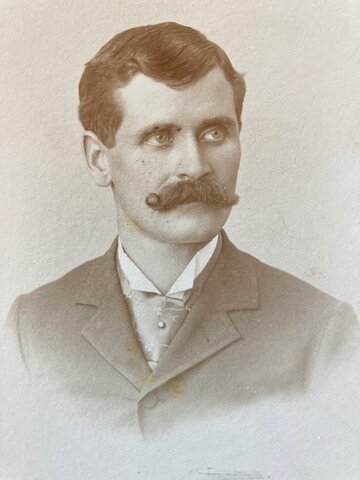
Gone are the days when almost all small towns had their own physicians, but those of us who remember them are filled with gratitude for all our doctors did for the health and care of the community. In last month’s article, we were introduced to Dr. F.F. Clifford, whose West Concord’s guest room bed made it home from Oregon to West Concord’s Museum via a kind donation and a generous road trip.
Doc Clifford was West Concord’s doctor from 1892 to 1938, a total of 46 years, until his health made it necessary for him to retire from practice. Six years after Doc Clifford arrived in West Concord, he was joined in town by a second physician, E.E. Harrison. Imagine a small town having two full time doctors. Near the end of Doc Clifford’s career, Dr. Grant Olson came to West Concord, and the town once again had two physicians until Doc Clifford retired.
Being a small town doctor in Doc Clifford’s time was a very public occupation.
Being a patient wasn’t very private either. In the West Concord Enterprises of the time there are countless descriptions of illnesses and accidents and what Doc Clifford did to help. Even misdiagnoses were featured in the newspaper. The following story is straight out of the December 16, 1897 Enterprise and is so typical of the times:
“Homer Baer had a narrow escape from instant death Monday evening. As it is he has a fractured skull and a severe cut on the forehead over the left eye. In company with Dave Fogelson and Gale Whiting, Homer boarded the mail train for a ride to Kenyon. When the train was pulling into the station at Kenyon the boys took it into their heads to alight before the train came to a stop. Dave and Gale were successful in landing safely, but when Homer jumped he did not see that there was a switch stand in his way, which his head struck, cutting a deep, ugly gash and crushing the outer shell of the skull. He was picked up by his companions and taken to the depot and a physician was called, but he could not do much to alleviate the boy’s suffering. Homer was put aboard the milk train and had two severe convulsions on the way down. Mr. Baer and Dr. Clifford were at the train and there were other willing hands who assisted in carrying Homer home. Dr. Harrison was called in to assist Dr. Clifford in dressing the wound. It was a delicate piece of surgical work and was skillfully performed. Several pieces of the skull were taken out. Other pieces that were crushed in but not entirely broken loose, were raised, and by 12:00 the wound was sewn up, after which the patient regained consciousness for the first time after being hurt. It was a close call, but Homer is resting easily and his chances are good for recovery. He is a bright boy, liked by all, and everyone hopes for his recovery. He erred in doing that which he knew his parents did not approve, likewise did his companions, and we believe it is a lesson that will long be remembered by all. They are all good boys, but like many others, became a little too venturesome.”
That unfortunate event was covered in a little more detail than I’m used to. Reading those early newspapers provides many more accounts of accidents, amputations and illnesses attended by Doctor Clifford.
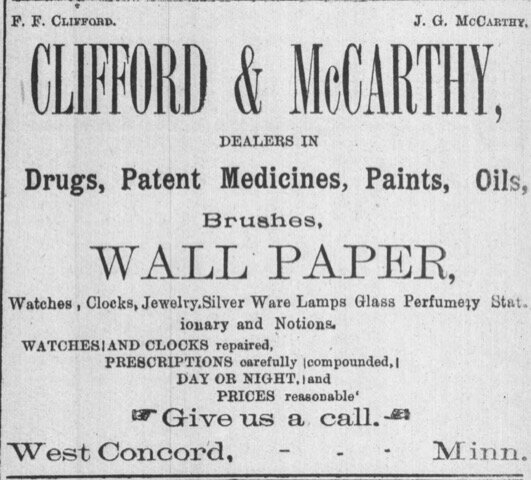
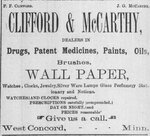
Doc Clifford arrived in West Concord with a great deal of energy. Within his first year in town he formed a partnership with J.G. McCarthy to own and operate the Clifford & McCarthy Drug Store. As in so many stores of the day, the business was not limited to drugs, patent medicines, and prescriptions. It also carried wall paper, brushes, watches, clocks, silverware, lamps, bikes and more. An 1893 newspaper reported that the Drug Store had just received a whole railroad carload of paint. The newspaper also said that Doc had gone on a business trip to Minneapolis and added, “That Drug Store has got to run First Class.”
Doc was appointed by the governor to the State Board of Health, and he was also West Concord’s Health Officer. He posted this message in town in the spring of 1898: “Clean up! Remove from premises and alleys all manure piles and other filth and garbage by May 15th.” West Concord may have had a bit of an odor back then.
In the early days Doc was paid by the city to provide medical services for “prisoners and tramps”. He was also paid by the county to examine children exposed to diphtheria and administer antitoxins to them to prevent serious disease. The county reimbursed him for care of the poor, as well. Beyond those duties, Doc was an official Chicago Great Western Railroad physician when needs arose among the railroad workers for medical care.
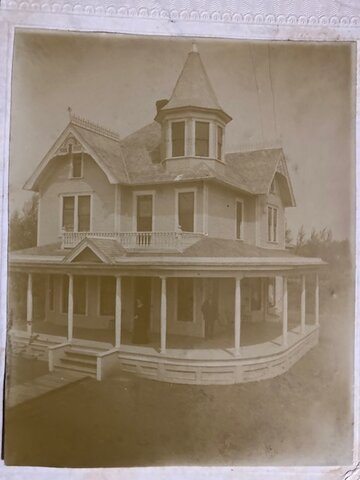
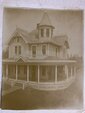
In 1894 Doc married Lillian Doran, an Illinois native. The building of their lovely home was reported stage by stage in the local newspaper. It still proudly stands on Irving Street—you might know it as the home of Susan and Brad Paulson. In 1899 a dressmaking shop opened in the front rooms of Doc’s residence, but we have no record of how long that enterprise lasted.
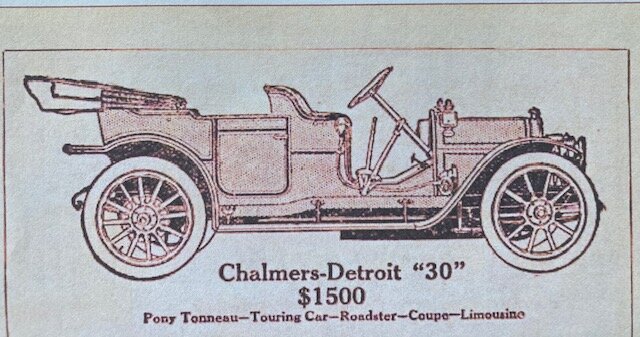
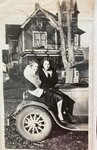
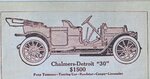
Doc was an adventurous man and was a member of the Dodge County Auto Club. The Club would line up, 26 autos in a row, and take a run to Austin or another area town. In 1911 Doc purchased a Chalmers car—we’re not sure which model.
We also know that he listed his Ford Roadster Model T for sale in 1920, stating that it was in good mechanical condition. Doc had a farm near Rose Creek in Mower County and he loved camping and fishing trips at nearby French Lake and at his cabin in Alexandria. He also visited Yellowstone National Park with his daughter May. Doc was always traveling somewhere.
Doc was honored by West Concord in informal and formal ways. Pat Derby just told me that her father was named Clifford, in honor of Doc Clifford who delivered him. In September of 1940 several thousand people attended a two day Homecoming and Fall Festival in West Concord where Dr. Clifford was honored at an impressive service. His years of service as a pioneer doctor are proof of what Gandhi once said, “The best way to find yourself is to lose yourself in the service of others.” Thank you, Dr. Clifford, for choosing West Concord for your life’s work.