
One of the reasons I’ve enjoyed writing “Museum Musings” for these past years is I learn from every article I write. Sometimes it’s my readers who teach me more and that’s exactly what happened after “Just a Girl Who Loves Playing Basketball” was published.
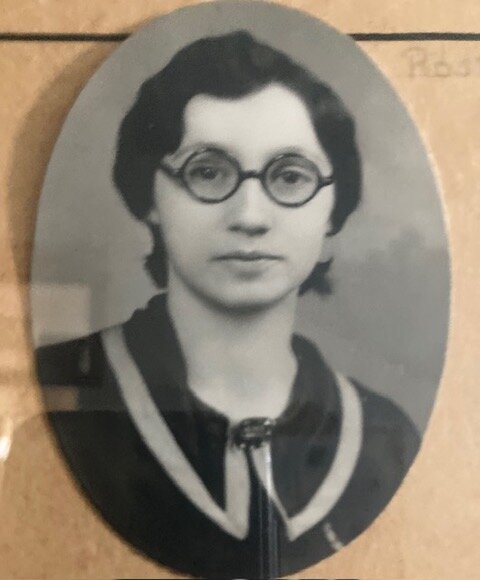
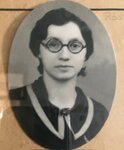
After reading “Just a Girl . . .” last month, a friend of mine texted me and asked if I was familiar with the book, Daughters of the Game by Marian Johnson and Dorothy McIntyre. I had come across a description of the book in my research. Published in 2005, I knew that it told the story of the first era of Minnesota girls high school basketball from 1891-1942. What I didn’t realize was that one whole page and parts of two others were devoted to the story that Rose Robinson Wichser, WCHS Class of 1929, told about her basketball days at West Concord from 1925-1929. Before I knew it my friend had shared her copy of the book with me and I was excitedly reading Rose’s story. Her words made that era of WCHS basketball come alive for me.
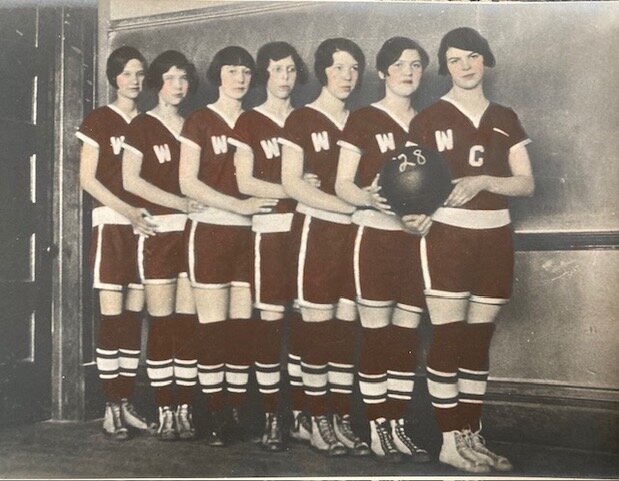
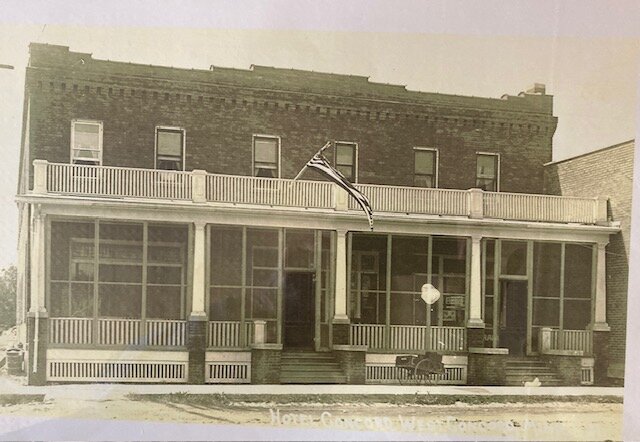
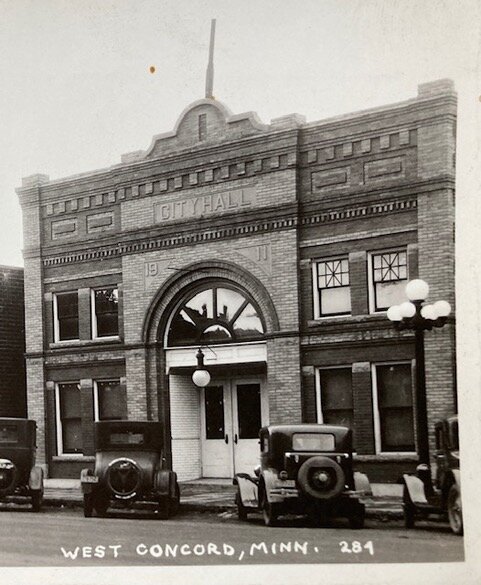
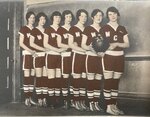
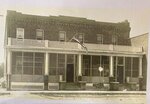
Here are a few new things I learned from Rose. When the WC girls played home games they dressed for the game at the West Concord Hotel, just across the street from City Hall, where the home games were played—very convenient. In Rose’s second year of playing, the team got new uniforms. They were the only team in Dodge County to have the newfangled short uniforms. Rose and the other girls felt embarrassed at first to have so much skin showing. They pulled their socks up as high as they could to be as modest as possible. Completing their uniforms were high-topped tennis shoes.
I’d forgotten about City Hall also being the town’s movie theater—the games were actually played in a movie theater. Rose said that the baskets were in front of the movie screen and the front door. To keep everyone warm there was a stove in the NE corner and one in the SW corner. The only place spectators could sit was “around the edges and in the movie projector area”, according to Rose. Not many people came to watch, but Rose did think that getting the new “short” uniforms increased attendance by young men in the area. The boys and girls games were played on the same night, the girls first, then the boys. Rose remembered the boys and girls being very supportive of each other because they made up most of the spectators. Most parents never attended any games—Rose’s never saw her play.
No water drinking was allowed during the games. It was believed that exercising hard, combined with drinking water, would make players sick. Instead, players were given a fourth of a lemon at intermission to refresh them. Wouldn’t that cause a stir at games today?
Rose was given the nickname “Popsey” as a player because she could pop out of nowhere on the court. Her position was center forward. The games were played with three guards and three forwards and only forwards could score. After every basket a jump ball took place, with signs given by the jumping center—Rose, of course. When passing, the ball was held chest high in both hands. When shooting free throws, hands were held low.
The social aspects of being on the basketball team provided extra fun. After games the players might stop at a local restaurant and have, in Rose’s words, “a 15 cent soda.”
Laura Peters, West Concord girls basketball coach, wrote this explanation in the 1929 WCHS school yearbook of the new age that had dawned for girls in the 1920’s. Titled “Girls’ Athletics” it explained a new understanding that unfortunately would not last long enough.
Now that the day of languid helpless girls has passed, a new healthy, active girl has taken her place. This new type of girl is not satisfied with a slow game of croquet, but prefers active team games which were formerly reserved for boys. Formerly the girl who developed her body was considered mannish and unladylike, and was looked upon as more or less of a tomboy. Next, when the number of girls interested in active life increased, interclass activities were organized. But these sports were only minor attractions in which the adherents played at the games rather than acquired a great deal of skill. Today girls’ athletics is at a state of metamorphosis where sports for girls is beginning to be recognized on a plane equal to that of sports for boys. Each season brings its own type of games so that everyone interested may participate. It depends whether the girls taking part in athletics are willing to undergo the stern test of loyalty to coach and team, teamwork, subordination, responsibility and dependability so that girls’ athletics may continue to grow.
We know that Rose and the other players on the girls’ teams of the 20’s and early 30’s had exactly the “right stuff” that their coach was talking about, but society had other ideas. Gladys Clark of Cromwell, MN relayed the story that was soon to be repeated over and over: “We were told in the fall of 1932 that there would be no more basketball games for the girls. Excuses were plenty. Girls did not have the stamina, it wasn’t good for our health, it was not ladylike and more.” Girls would have to wait until the 1970’s to have equal opportunity back for participating in sports. If you had the chance to watch the Girls State Hockey or Basketball Tournaments earlier in this winter, you know for sure that girls are back and powerfully thriving.
This short poem in the 1929 WCHS Yearbook says it all about our Rose.
ROSE
Rose the jumping center
Wins the Seniors’ fame
Her clever B.B. stuff
Always wins a game.
Thanks for being a trailblazer, Rose!