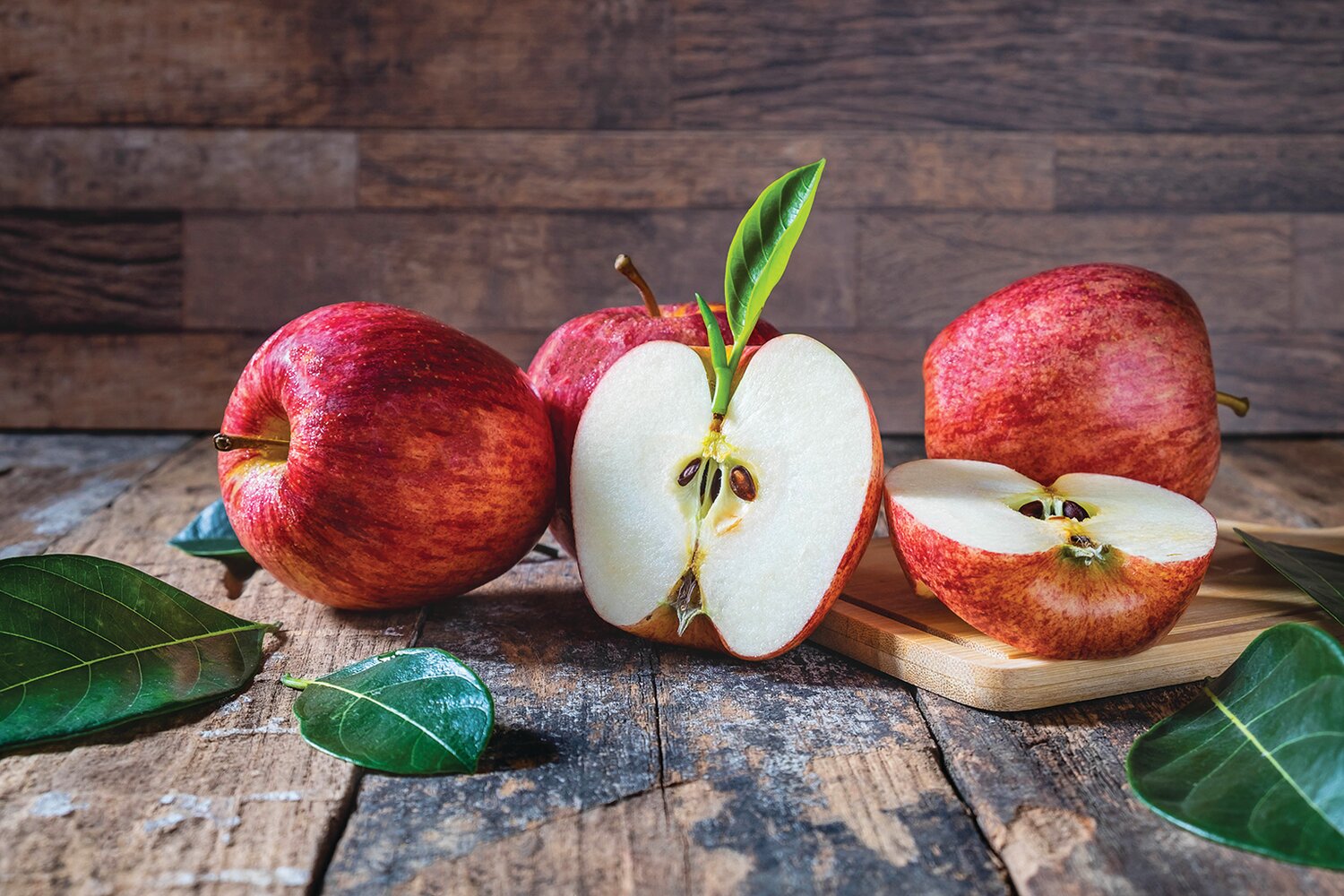
You probably have heard the rhyme, “An apple a day keeps the doctor away.” But what does an apple really do for you? Does any apple work, or only certain kinds? Let’s dig a little deeper.
Medications - A 2015 study published in JAMA Internal Medicine by Davis et al observed that those who consumed one apple a day required less prescription drugs. Those who eat one apple a day probably make other healthy choices as well that contribute to this positive association between apples and reduced drugs.
Heart Disease - A 2017 study published in Molecular Nutrition Food Research by Bondonno et al compared apples high in flavonoids, which are found in the apple skin, with apples low in flavonoids and observed improved blood flow through the brachial arteries when the high flavonoid apples were eaten. In other words, these apples improved the blood flow through the body. The apples with high flavonoid content will typically be darker red apples that are not too sweet.
Cholesterol - The healthy control of cholesterol has also been improved with an apple a day. A 2017 study in the Journal of the Science of Food and Agriculture by GC Tenore compared modern apples with the Annurca apple and observed that two small Annurca apples a day significantly lowered the bad cholesterol and increased the good cholesterol. The Annurca apple is known for its higher flavonoid content. Older, heritage apples typically have high flavonoid and polyphenol content.
Blood Sugar – Those individuals who had a daily intake of apple polyphenols, which are from the skin of the apple, had an improved ability to manage blood sugar compared to individuals who did not consume the polyphenols. This observation was reported in a 2017 study published in Diabetes Research and Clinical Practice by Shoji et al. One possible reason for this improved sugar control is the polyphenols seem to reduce the sugar absorption ability of the intestines by closing the primary “door” that sugar uses to pass through the intestines, according to Schulze et al in their 2014 published study in Molecular Nutrition and Food Research.
Colon Health – The ability of the polyphenols of apples to “close the door” on sugar transport to cells is one of the pathways to stop the growth of cancer cells in the colon, as observed in a 2016 study by Lin et al in the Journal of Agriculture and Food Chemistry. A cancer cell has many more “doors” to bring in sugar to accelerate growth, so polyphenols help to close these doors and inhibit the growth of cancer cells. The peeling of the apple contains the highest content of effective polyphenols with antioxidant activity, anti-bacterial activity, and anti-cancer activity, which was documented in a 2016 study by Lin et al in the Journal of Food Science.
The older apple varieties that have high polyphenol content include – Braeburn, Jonathan, McIntosh, Gravenstein, and Annurca. Avoid the newer varieties that have been bred for increased sugar content and size.
An apple a day is the eighth guideline in the Foundation to Thrive program, a whole food lifestyle program providing personal coaching to help you succeed in your goal to live a healthier life. This program provides a personalized meal plan based on your unique blood chemistry. Those who have followed their personal plan have observed blood sugar levels become controlled, cholesterol levels improve, inflammation decreased, acid reflux disappear, and the body shifts to a healthy weight.
Every health challenge you face in the year ahead has a nutritional answer to it. Your health challenge can be successfully addressed with a quality nutrition plan. Contact me to discuss your health goals for the coming year. I can help you realize greater health freedom in 2025. You can contact me at nutritionproportion@gmail.com, or check out my website at www.nutritionproportion.net